In an age of unprecedented technological advancement, international connectivity and economic prosperity, one of humanity's oldest crimes continues to thrive — the buying, selling and exploitation of human beings.
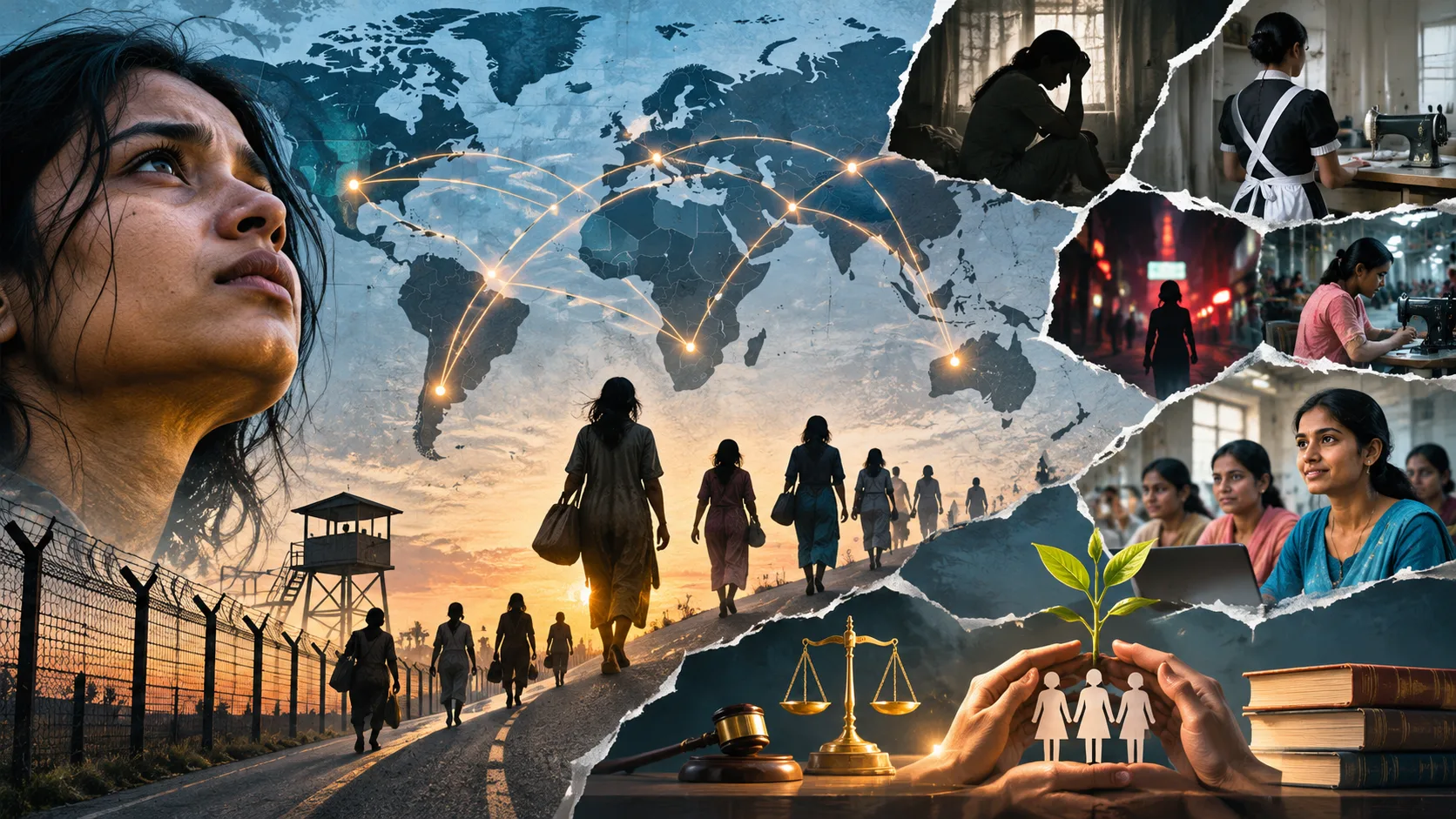
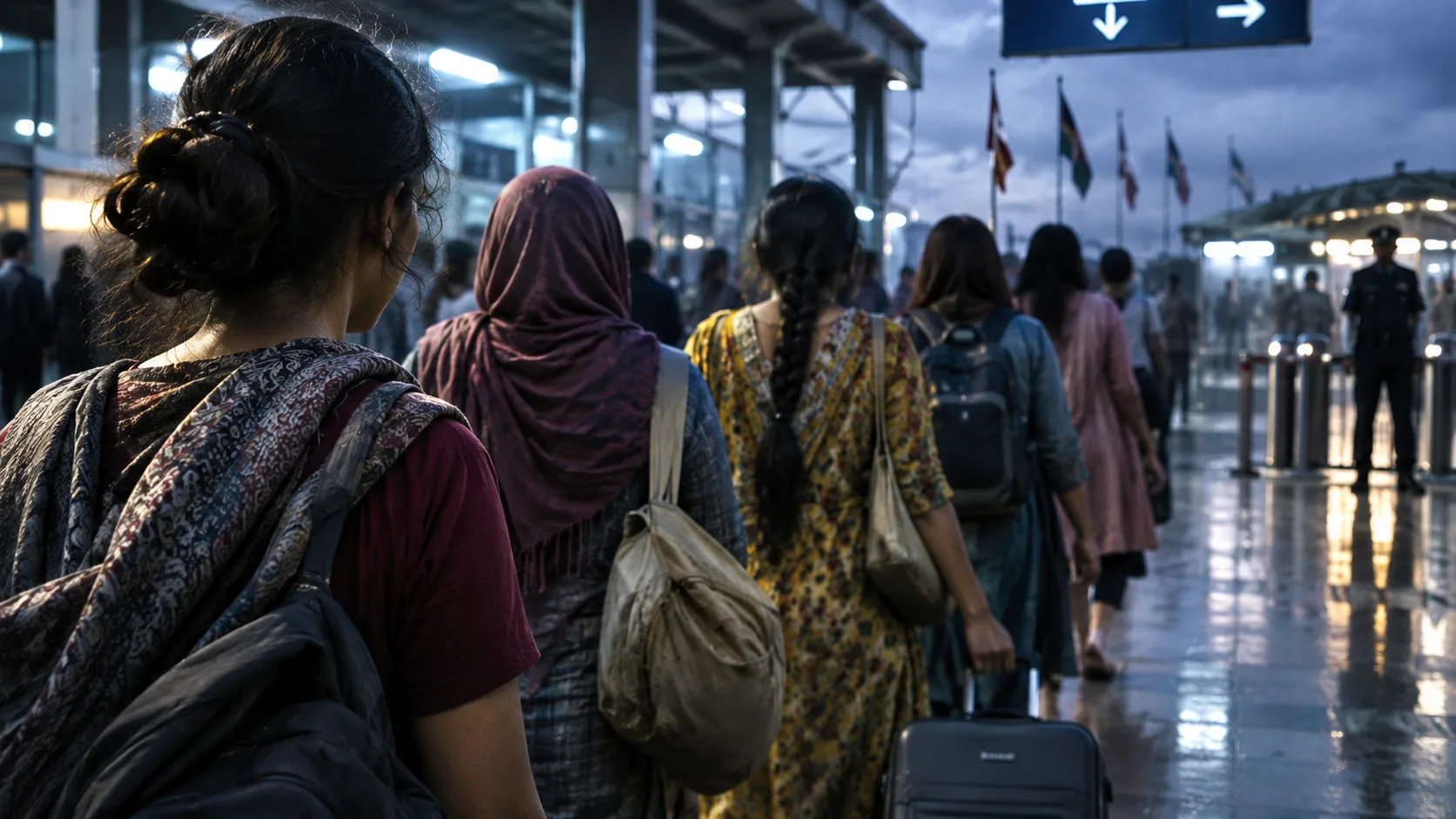
Across the world, women and young girls are recruited through deception, manipulated through false promises, transported across borders or exploited within their own countries. Many leave their homes hoping for employment, education, marriage or a better future. Instead, they find themselves trapped in circumstances over which they have little or no control.
Human trafficking is not merely a criminal activity. It is a commercial enterprise sustained by demand, economic inequality, corruption and institutional failure.
The Magnitude of the Problem
The United Nations Office on Drugs and Crime (UNODC) reported a 25% increase in detected trafficking victims between 2019 and 2022. Women and girls remain disproportionately affected, particularly in cases involving sexual exploitation. The International Labour Organization (ILO) estimates that approximately 28 million people worldwide are subjected to forced labour. Nearly four out of every five people subjected to forced commercial sexual exploitation are women or girls.
In 2024, the ILO estimated that forced labour in the private economy generated illegal profits of $236 billion annually. These figures cover broader forms of exploitation, not exclusively the trafficking of women. Nevertheless, they reveal the enormous economic interests sustaining modern slavery. The actual number of trafficking victims remains unknown. Countless victims never encounter law enforcement agencies, appear in official records or receive assistance.
Where Do These Women Come From?
Trafficking affects virtually every region of the world. However, poverty, unemployment, political instability, armed conflict, displacement and gender inequality make certain populations particularly vulnerable.
Countries frequently associated with documented trafficking and exploitation patterns include:
South Asia: India, Bangladesh and Nepal.
Southeast Asia: Myanmar, Cambodia, Vietnam, Indonesia and the Philippines.
Africa: Nigeria, Ethiopia, Uganda, Kenya and Eritrea.
Eastern Europe: Ukraine, Moldova and Romania.
Latin America: Venezuela, Colombia, Brazil and Honduras.
These countries are illustrative examples rather than a definitive ranking. Many are simultaneously countries of origin, transit and destination. Women seeking overseas employment are especially vulnerable when recruitment agencies operate without effective supervision. Refugees and displaced populations face additional risks because they frequently lack financial resources, legal protection and reliable employment opportunities.
Yet trafficking is not exclusively a consequence of poverty. Women from relatively prosperous backgrounds can also become victims of deception, emotional manipulation and coercion.
Where Are They Taken?
Trafficking frequently follows patterns of economic inequality, with victims moving towards regions offering greater employment opportunities and higher purchasing power.
Prominent destination regions include:
Western Europe: Germany, France, Italy, Spain, the Netherlands and the United Kingdom.
Middle East: Saudi Arabia, the United Arab Emirates, Qatar, Kuwait and other Gulf countries.
North America: The United States and Canada.
Asia: Thailand, Malaysia, China, Japan and other regional economic centres.
UNODC documented victims of at least 162 nationalities across 128 destination countries in its analysis of 2022 trafficking patterns. In the European Union alone, 9,678 trafficking victims were officially registered in 2024, approximately 63% of whom were women or girls.
International trafficking, however, represents only part of the problem. Many women are exploited within their own countries, sometimes only a short distance from their homes.
What Happens to These Women?
Sexual exploitation is among the most widely recognised forms of trafficking involving women, but it is far from the only one.
Victims may be subjected to:
Forced prostitution and commercial sexual exploitation.
Domestic servitude and unpaid household work.
Forced marriage and reproductive exploitation.
Compulsory labour in factories, farms and hospitality establishments.
Forced participation in criminal activities.
Traffickers maintain control through threats, violence, confiscation of identity documents, financial dependency and intimidation of family members. Some women work behind closed doors in private residences, making their exploitation particularly difficult to detect. Others appear to live ordinary lives while remaining under constant coercion. Even after escaping, survivors may experience psychological trauma, social rejection, financial hardship and difficulties rebuilding their lives. Children born during exploitation may face additional disadvantages.
Rescue, therefore, is only the beginning of recovery.
Why Is Regulation So Ineffective?
The international community already possesses legal mechanisms to combat trafficking, including the United Nations Palermo Protocol adopted in 2000. Most countries have legislation criminalising human trafficking.
The problem lies largely in implementation.
Economic incentives: Exploitation generates enormous profits. Criminal networks, dishonest recruiters and abusive employers benefit from maintaining a supply of vulnerable workers.
Corruption: Complicity among officials, where it occurs, undermines investigations and allows criminal enterprises to continue operating.
Jurisdictional barriers: Recruitment, transportation and exploitation may occur in different countries, complicating investigations and prosecutions.
Inadequate labour protection: Domestic workers and informal-sector employees frequently lack effective access to labour inspections, legal representation and grievance mechanisms.
Fear of authorities: Victims without valid immigration documents may fear detention or deportation more than their exploiters.
Social stigma: Survivors of sexual exploitation can face rejection by their families and communities, discouraging them from reporting crimes.
Persistent demand: Trafficking cannot flourish without people and businesses willing to purchase exploitative services or benefit from coerced labour.
The global response remains disproportionately focused on controlling migration and intercepting victims rather than dismantling the economic systems that profit from exploitation.
The Way Forward
Combating trafficking requires coordinated action by countries of origin and destination, international institutions, businesses and civil society.
Regulate recruitment agencies. Governments must establish enforceable licensing requirements, transparent employment contracts and accessible complaint mechanisms.
Protect migrant workers. Every worker should retain possession of personal documents, freedom of movement and the right to leave abusive employment.
Follow the money. Financial investigations, asset seizures and meaningful penalties should make trafficking financially unattractive.
Strengthen international cooperation. Countries must improve information sharing, cross-border investigations, prosecution arrangements and victim protection.
Hold businesses accountable. Companies should identify and address forced labour throughout their supply chains, including subcontracted services.
Invest in rehabilitation. Survivors require safe accommodation, healthcare, psychological support, legal assistance, education and sustainable employment opportunities.
Reduce vulnerability. Education, economic independence, employment opportunities and protection for displaced populations can reduce susceptibility to exploitation.
Technology companies must also strengthen safeguards against fraudulent recruitment advertisements and online exploitation while respecting individual privacy.
Above all, victims must be treated as people whose rights have been violated, not as immigration offenders or criminals because of acts they were compelled to perform.
A Collective Responsibility
Human trafficking exposes a fundamental contradiction in modern civilisation. Goods, capital and information move across borders with increasing freedom, yet millions of human beings remain deprived of the freedom to determine their own lives.
Countries of origin cannot simply blame destination countries. Destination countries cannot dismiss exploitation as a problem originating elsewhere. Businesses cannot ignore the conditions under which cheap labour becomes available, and societies cannot remain indifferent to the demand that sustains exploitation.
Human dignity cannot depend on nationality, gender, economic status or immigration documents.
Until the exploitation of another human being becomes economically unprofitable, legally dangerous and socially unacceptable, trafficking will continue to flourish.
The freedom of women is not a regional concern. It is a shared human responsibility.
The country lists are illustrative, not statistically ranked. Individual country volumes require further verification because reporting standards differ considerably.
Comments
Leave a comment
Your email will not be displayed. Comments appear after approval.